
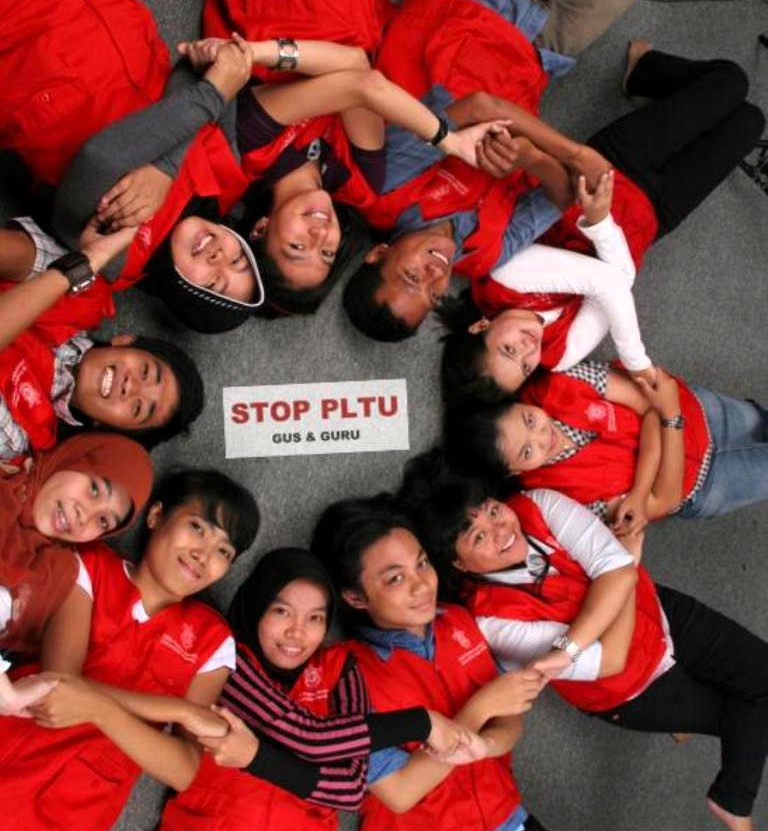
WHO ARE WE?
Gerakan Udara Sehat (Clean Air Movement), abbreviated as GUS, is an Indonesian NGO that fights to facilitate the helpless victims of coal-fired power plant pollution to pressure the Indonesian Government to close all coal-fired power plants in Indonesia as soon as possible and replace them with environmentally friendly power plants.
GUS was founded in a community deliberation on March 23, 2013 in Bogor, West Java Province, Indonesia, by 44 local community leaders representing thousands of marginalized people from around Indonesia as the worst victims of coal-fired power plant pollution.
WHY WAS GUS FORMED?
GUS was formed based on the accumulated severe suffering of tens of thousands of marginalized members of Indonesian society who have become fatal and helpless victims of pollution from more than one hundred giant coal-fired power plants that poison the skies of this country and its neighbors. This pollution has caused thousands of deaths, and tens of thousands suffer from acute, incurable respiratory illnesses.
In fact, the pollution has brutally robbed the people of their right to clean air, an absolute right guaranteed by the 1945 Constitution of the Republic of Indonesia, as well as Law Number 32 of 2009 concerning Environmental Protection and Management, and other related regulations in this country.
In addition to increasingly producing deadly pollution, the coal-fired power plants are also responsible for the increasing fatal impacts of climate change on human and non-human communities, especially tens of thousands of marginalized people themselves and the various ecosystems around them which are the most strategic support systems for human lives.
The largest and most severe victims of those fatal impacts are the poorest and most powerless groups in rural and urban areas, especially the homeless and Indigenous Peoples. In addition to being more than 60% of the total population affected, the urban and rural poorest generally have inadequate or no resources or opportunities at all to save themselves from the fatal impacts of the pollution.
In fact, Indonesia is one of the world’s top 10 emitters of carbon dioxide and the world’s third largest producer of coal after China and India.
The protracted existence of coal-fired power plants in this country is proven to be the most devastating and uncontrolled source of lethal pollution that threatens the survival of humans and other creatures on this planet.
A 2020 report by Greenpeace and the Harvard University-affiliated research group, Atmospheric Research and Analysis (ARA), estimated that 12.7 million people in Indonesia are exposed to coal-fired power plant pollution. Currently Indonesia has 234 coal-fired power plants with a total capacity of 45.35 GW. Greenpeace and ARA found that the pollution from these plants is responsible for an estimated 7,100 premature deaths and 12,000 cases of respiratory disease each year.
Meanwhile, a 2022 report by the Centre for Research on Energy and Clean Air (CREA) and the Institute for Essential Services Reform (IESR) estimated that the number of people exposed to coal-fired power plant pollution in Indonesia could be even higher, namely at around 20 million people.
However, to date, the government of Indonesia has not shown the political will to address this catastrophic environmental and humanitarian disaster. Even worse, the country's rulers are increasingly embracing coal to meet national energy needs, in addition to being a major export commodity.
In fact, since the beginning Indonesia has been committed to the Paris Agreement by signing it on April 22, 2016, and ratifying it through Law No. 16 of 2016. Since then, it has made significant strides toward a clean energy transition. As a matter of fact, in 2021, Indonesia pledged to gradually phase out coal-fired power plants, vowing it would only complete projects already in the works. At the time, that meant its last coal plants would come online in 2027, with the last plant to be shut by 2056.
President Prabowo Subianto even announced at the G20 summit in November 2025 that Indonesia would build over 75 gigawatts (GW) of renewable energy capacity in the next 15 years to replace coal plants. But in February, after President Trump said the US would withdraw from the Paris climate agreement, Indonesia signaled it might follow suit. And, culminating, on May 26, Indonesia's Energy Minister, Bahlil Lahadia, confirmed that Indonesia expects to add new coal-fired power plants in its plan of adding 69.5 gigawatts (GW) of power capacity by the end of 2034. Even some new coal power plants are still expected to enter commercial operation as late as 2033.
The Indonesia’s backtracks on coal phase-out will of course further exacerbate premature deaths, especially among marginalized communities, due to pollution from coal-fired power plants in Indonesia and neighboring countries. It also violates the community’s right to a healthy environment, which is one of the fundamental rights recognized by the constitution.
OUR STRATEGIC FRAMEWORK
VISION: Climate justice where the rights of present and future generations – both human and non-human – to enjoy healthy air are fully fulfilled.
MISSION: We are a non-governmental organization working in Indonesia. We fight to facilitate the helpless victims of coal-fired power plant pollution to pressure the Indonesian Government to close all coal-fired power plants in Indonesia and replace them with environmentally friendly power plants as soon as possible.
MAIN PROGRAM: Closing All Coal-Fired Power Plants in Indonesia. Through this program, we provide resources, training, and support to affected communities to strengthen their capacity to drive positive change. Through these initiatives, we seek to contribute to realizing climate justice by creating a healthier, cleaner, and more sustainable world, free from the harmful impacts of all sources of air pollution, especially coal-fired power plants.
BENEFICIARIES: GUS works for and with the poorest groups who are severely affected by coal-fired power plant pollution primarily Indigenous Peoples in rural areas and the homeless in urban areas. Almost all of our beneficiaries are breadwinners in their families. Most of them are women and girls.
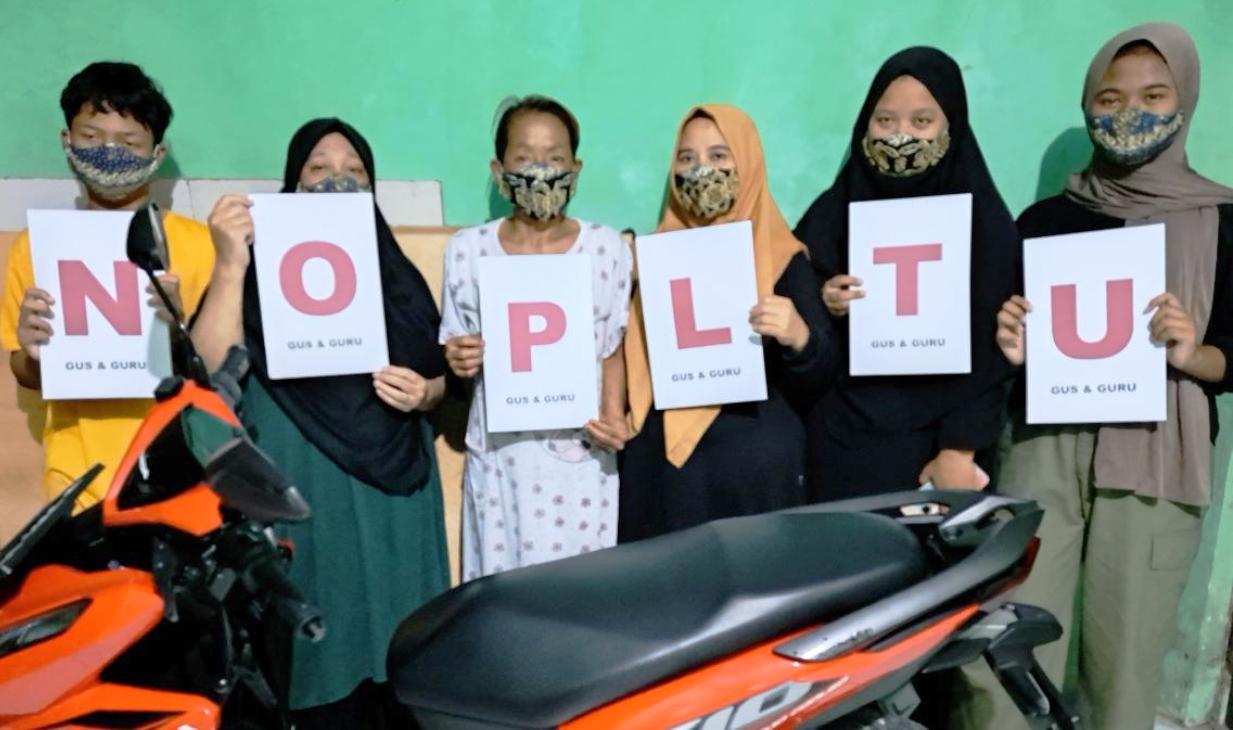
COMPLETED PROJECTS
Since our founding until the end of December 2025, we have completed the following projects:
FINANCING STRATEGY
We obtain the funds we need to finance our organization and program from various sources, primarily:
GOVERNANCE
Gerakan Udara Sehat is hierarchically governed by three bodies, as follows:
BOARD OF DIRECTORS:
Chairwoman: Lilik Mustikasari
Secretary: Joko Hermanto
Treasurer: Henny Susanti
Members: Veronika Abraham, Siti Fatimah, Ida Sanjaya, Rimba Basirun, Syahrul Ali
ADVISORY COUNCIL:
Coordinator: Christopher Major
Secretary: Endang Rahayu
Consultants: Nur Nita Desriani (Advocacy), Suhaele Tiworo (Legal Support), Halim Asy’ari (Public Health)
EXECUTIVE BOARD:
Executive Director: Ali Maturahim
Program Coordinator: Tomas Darmawan
Fundraising Coordinator: Elizabeth Anaopa
Accountant: Frederika Tatontos
Administration Manager: Lukas Hartono
We are all volunteers at this NGO. Our Board of Directors, Advisory Council, and Executive Board are managed by volunteers comprising community leaders, legal experts, health experts, environmental NGO activists, journalists, and student leaders.
In addition, all of our operational activities in the field are fully supported by more than 400 other volunteers, almost all of whom represent tens of thousands of marginalized groups as helpless victims of coal-fired power plant pollution from across Indonesia.
CONTACT US
For more information, contact:
Gerakan Udara Sehat (Clean Air Movement)
Head office:
Kp. Pabuaran Sawah RT 001 RW 004 Kecamatan Ciampea
Kabupaten Bogor, Provinsi Jawa Barat, Indonesia, Zip code: 16620
Website: https://gerakanudarasehat.lsm.or.id
Email: gerakanudarasehat@lsm.or.id
Mobile: +62 895336726091
X (formerly Twitter) account: @GUS24024 (https://x.com/GUS24024)
Contact person::
Ali Maturahim (Executive Director)
Email: ali.gerakanudarasehat@lsm.or.id
Mobile: +62 85697001818